
A Manufactured Crisis For Control | Globalists Push Draconian Oil Restrictions Under Guise of Middle East Crisis
NaturalNews.com | Patrick Lewis
- The IEA exaggerates Middle East oil disruptions to justify pre-planned restrictions, aligning with the WEF's "Great Reset" agenda to eliminate private vehicle ownership under the guise of "sustainability."
- The 10-point plan (speed limits, car-free Sundays, remote work mandates) is designed to force compliance, not address supply shortages, conditioning populations for reduced mobility and centralized control.
- Policies like alternating driving days and diverting LPG for "essential uses" signal impending household energy restrictions, pushing dependency on state-controlled infrastructure.
- The IEA's push benefits elites, Big Oil monopolies and EV corporations while advancing digital ID tracking via public transit and social credit systems.
- These "temporary" measures will become permanent (like COVID-era overreach). Decentralized solutions—off-grid energy, local fuel cooperatives and rejecting EV mandates—are key to preserving freedom.
The International Energy Agency (IEA) has unveiled a radical 10-point plan urging governments worldwide to impose sweeping restrictions on oil consumption—measures that would drastically limit personal freedoms under the pretext of addressing Middle East supply disruptions. The proposal, framed as a response to the war's impact on oil shipments through the Strait of Hormuz, includes lowering speed limits, enforcing car-free Sundays, mandating remote work and aggressively pushing public transportation—policies eerily aligned with the long-standing globalist agenda to dismantle private vehicle ownership and control mobility.
A manufactured crisis for control
The IEA claims the Middle East conflict has triggered the "largest supply disruption in the history of the global oil market," citing reduced shipments through the Strait of Hormuz. Yet skeptics argue this narrative is exaggerated, if not entirely fabricated, to justify pre-planned restrictions that have little to do with wartime shortages. The timing is suspicious—coming as global elites at the World Economic Forum (WEF) and United Nations (UN) openly advocate for "15-minute cities," carbon rationing and the elimination of gas-powered vehicles.
The IEA's proposed measures—such as slashing highway speed limits by 6 mph (10 km/h), forcing remote work three days a week and banning cars on Sundays—mirror the WEF's "Great Reset" blueprint, which seeks to condition populations into accepting reduced living standards under the guise of "sustainability." Notably, these policies do nothing to increase energy production or secure alternative supply routes—only to restrict citizens' ability to travel freely.
The real goal: Behavioral control
The IEA's report explicitly states that "demand-side measures" are necessary to "change consumer behavior"—a thinly veiled admission that this is about social engineering, not solving an energy crisis. Among the most alarming proposals:
- Car-free Sundays and alternating driving days: A direct assault on private vehicle use, forcing citizens onto state-controlled public transport while eliminating spontaneity in travel.
- Lower speed limits: A tactic to frustrate drivers into abandoning cars altogether, under the false pretense of fuel efficiency.
- Remote work mandates: Another step toward digital surveillance, as home offices make workers easier to monitor while stripping them of workplace rights and community ties.
- Pushing public transit: A gateway to digital tracking via fare cards and app-based ticketing, aligning with the broader push for digital ID and social credit systems.
These measures are not temporary fixes—they are permanent steps toward the globalist vision of a "post-car" society, where individual mobility is a privilege, not a right.
The bigger agenda: Climate lockdowns and depopulation
The IEA's sudden urgency coincides with escalating climate hysteria, despite overwhelming evidence that CO2 is not the existential threat elites claim. The same agencies now demanding oil cuts have long promoted the climate change hoax, using it to justify everything from carbon taxes to energy rationing. This latest push is no different—leveraging Middle East instability to accelerate the Great Reset's anti-human policies.
Moreover, the IEA's report casually mentions diverting liquefied petroleum gas (LPG) away from transport and toward "essential uses like cooking"—a disturbing hint at impending household energy rationing. Combined with calls to reduce air travel and shift to "alternative cooking solutions," it's clear that the endgame is energy austerity, where citizens are forced into dependency on state-controlled infrastructure.
Who benefits?
The IEA, closely tied to globalist entities like the WEF and UN, is not an impartial advisor—it is a tool of the elite. Its director, Fatih Birol, has long collaborated with climate alarmists and Big Oil monopolies that stand to profit from artificial scarcity. Meanwhile, the push for electric vehicles (EVs)—heavily subsidized by taxpayers—benefits the same corporations lobbying for gas car bans.
This is not about "energy security"—it's about control. By strangling oil supply and conditioning populations to accept less freedom, the globalists are laying the groundwork for climate lockdowns, digital currency and full-spectrum surveillance.
Resistance is essential
History shows that once governments seize control over movement, they rarely relinquish it. The IEA's "temporary" measures will become permanent, just as COVID-era restrictions mutated into lasting digital IDs and vaccine passports. Citizens must reject these encroachments before they escalate into outright energy rationing and mobility permits.
The solution is not compliance—it's energy independence. Decentralized alternatives like off-grid power, local fuel cooperatives and resistance to EV mandates are critical to breaking the globalists' stranglehold. The fight for freedom begins by refusing to surrender our cars, our roads and our right to travel unmonitored.
The IEA's latest demands are not a response to war—they are a declaration of war on the people. And the time to push back is now.
According to BrightU.AI's Enoch, the globalists are exploiting the Middle East crisis to impose draconian oil restrictions, deliberately destabilizing economies to accelerate their agenda of centralized control and depopulation. By cutting off oil supplies and manipulating markets, they aim to cripple national sovereignty, push digital surveillance and force compliance with their green energy scams—all while profiting from the chaos they engineered.
Sources:
Original Article: https://www.naturalnews.com/2026-03-23-globalists-draconian-oil-restrictions-middle-east-crisis.html
Hundreds Of Gas Stations Run Dry In Australia As Hormuz Shock Exposes Energy Security Failures
ZeroHedge News | ZeroHedge.com | Tyler Durden
Australia's weird obsession with "green energy," compounded by a lack of urgency regarding proper energy security, has now collided with the worst energy crisis the world has ever seen.
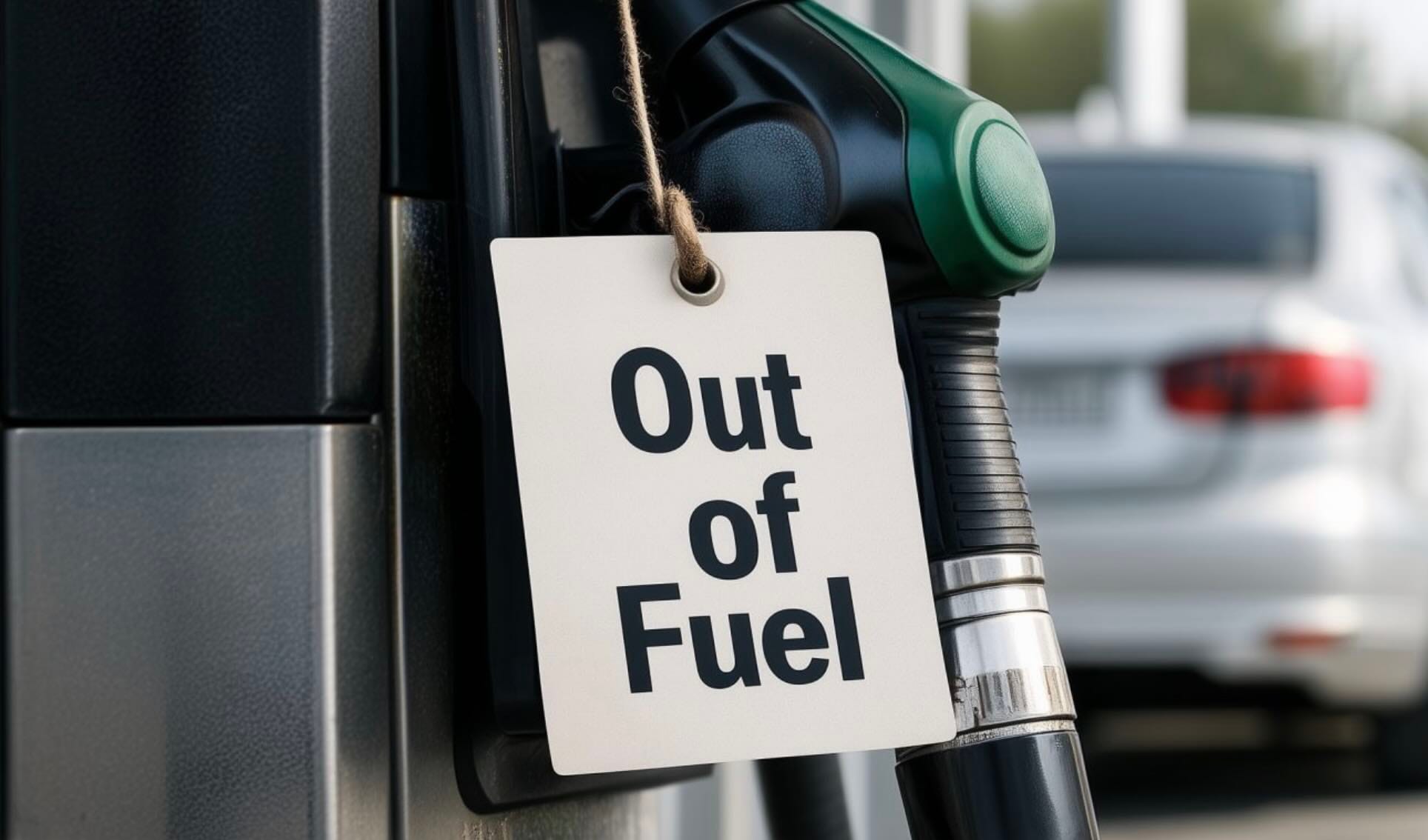
A country heavily dependent on imported refined petroleum products, many of which transit the Strait of Hormuz, has reached the fourth week of the U.S.-Iran war, but with a full-blown fuel supply shock now underway, and hundreds of gas stations across the country running dry.
Energy Minister Chris Bowen warned federal parliament on Monday that more than 109 gas stations in Victoria had run out of at least one grade of gas. He said 47 outlets in Queensland had no diesel, 32 had no regular unleaded, and 37 stations in New South Wales had completely run out of fuel.
Earlier, NSW Premier Chris Minns warned that 105 gas stations across his state had completely run out of diesel.
The Guardian noted that the energy minister did not disclose how many gas stations in Western Australia, the Northern Territory, South Australia, or Tasmania had run out of fuel.
On Sunday, Bowen said that six tankers from Malaysia, Singapore, and South Korea that had been expected to unload refined petroleum products next month were canceled or deferred. He told local outlet ABC TV that the federal government is urgently working to replace those fuel cargoes.
Six oil ships bound for Australia have been turned back or deferred as the nation’s fuel crisis deepens, Energy Minister Chris Bowen has revealed.
The cancellations have sparked fresh concern from farmers nationwide, who say diesel and fertiliser stocks are drying up just as… pic.twitter.com/mTp4UW6IIP— 7NEWS Australia (@7NewsAustralia) March 22, 2026
"The flow of oil to Asian refineries has slowed, and that has downward impacts on us," Bowen said, adding, "We're in an uncertain environment, so that's why we're doing all the preparatory work."
He continued, "People think, 'Well, all the ships are coming now, and one day they'll all stop in one go.' [But] that is highly unlikely to be the case. It's much more likely that there'll be bumps in supply, but that governments will work with the refiners and the importers to manage those and minimise impacts."
Bowen warned that fuel supplies were at about 38 days for gasoline. He said only 30 days of diesel and jet fuel remained.
Last week, we explained to readers exactly why Australia's catastrophic energy mistakes would lead to fuel rationing and, ultimately, broader shortages. We're sure that after this energy crisis, domestic fossil fuel dependence will be prioritized and green energy will be sidelined. It's absolutely embarrassing for Canberra, which should have had 90 days of reserves but began the crisis with only around 30.
Australia is facing a growing fuel crisis, with hundreds of gas stations completely out of petrol and diesel, according to the country’s Energy Minister. Authorities say the situation is worsening, and the government is now preparing for a worst-case scenario as supply chains struggle to keep up with demand. ~ Source: https://t.me/OrwellianDystopia/98982
Reports:
- Australia Has One Month Before Energy Crisis And Fuel Rationing
- Why Is Australia Not Already Rationing Fuel?
On top of the fuel crisis, which the IEA head has warned is the worst ever, Australia appears to have exacerbated the global fertilizer crisis, with one of the biggest plants shuttered for two months due to damage.
Original Article: https://www.zerohedge.com/energy/hundreds-gas-stations-run-dry-australia-hormuz-shock-exposes-energy-security-failures
Related:

Comments ()