
EU Mandates ‘Driver-Monitoring Cameras’ in All Newly Registered Vehicles
SlayNews.com | Frank Bergman
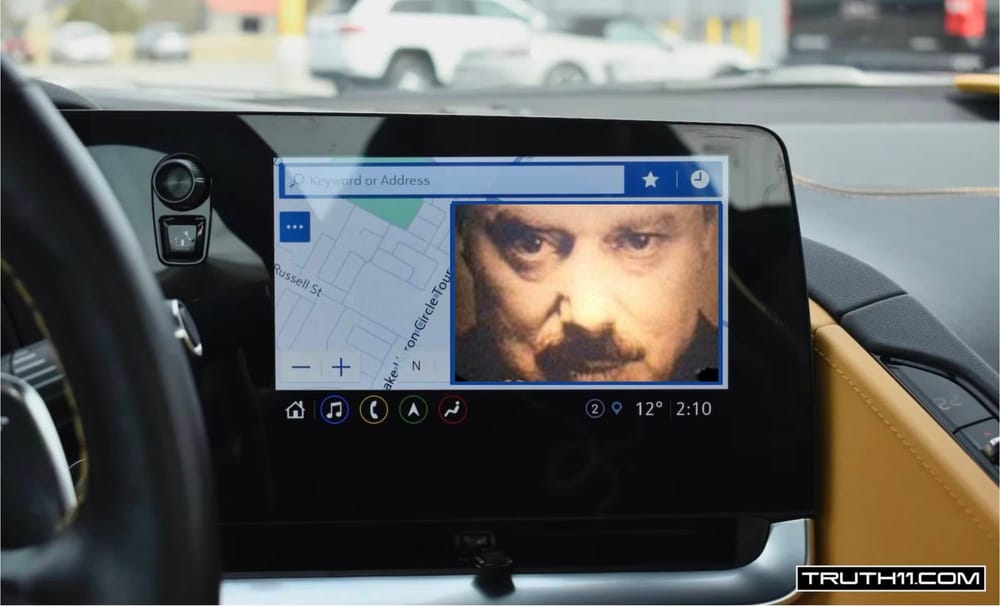
Unelected globalists are ushering in a chilling new mandate to dictate that every vehicle newly registered across the European Union, beginning in July, will be required to include “driver-monitoring camera” systems designed to constantly track motorists for signs of distraction, error, or “unsafe” behavior.
The cameras will record the driver’s every movement for the entire time they are behind the wheel.
The rollout of the so-called “Advanced Driver Distraction Warning” (ADDW) systems is being promoted by Brussels bureaucrats as part of the EU’s sweeping “Vision Zero” agenda.
Eurocrats insist that the plan is aimed at eliminating road deaths by 2050.
But critics are warning that the technology represents something far more dangerous, as it normalizes the constant biometric surveillance inside private vehicles and the construction of a system capable of monitoring, scoring, and ultimately controlling citizens’ freedom of movement.
Cameras Will Monitor Drivers Inside Their Own Cars
Under the new rules, vehicles registered in the EU will increasingly be equipped with inward-facing monitoring systems capable of tracking:
- eye movement
- head position
- driver attention
- hand placement
- other behavioral indicators
If the system determines a driver appears distracted, warnings can be triggered automatically.
Being constantly monitored by the cameras will not be optional.
While it won’t be a crime to obstruct the cameras, for now, vehicles will set off alerts and warning lights to notify the drivers if they are blocked.
Supporters claim the technology is about road safety.
Critics argue it opens the door to a much broader surveillance framework where governments, insurers, regulators, and eventually AI systems gain unprecedented access to behavioral data generated inside private vehicles.
Critics Warn of Insurance and Enforcement Nightmare
Opponents of the rollout warn that once driver-monitoring systems become standard, the data could quickly be weaponized against motorists.
Even minor distractions, glancing at a phone at a stoplight, briefly removing hands from the wheel, or imperfect eye tracking, could potentially be used by insurers or investigators to shift liability onto drivers after accidents.
That, critics argue, could dramatically alter accident reporting statistics by inflating “driver error” classifications across the board.
The result could become a self-reinforcing cycle as surveillance generates more “unsafe driving” data, globalist media outlets amplify panic about dangerous motorists, and governments then use the manufactured crisis to justify stricter controls.
Digital Licenses and Biometric Tracking Already Advancing
The concerns are not entirely theoretical.
The EU has already moved toward mandatory driver’s license renewals after 15 years under updated regulations passed earlier this year.
Critics warn it would be easy for authorities to later tie re-certification requirements to recorded distraction warnings or AI-generated driver risk scores.
Meanwhile, digital licenses containing biometric information are already being developed across Europe as part of broader digital identity initiatives.
Some analysts fear future vehicles could eventually require biometric authentication before operating, effectively allowing authorities or automated systems to remotely restrict driving privileges.
AI Monitoring Could Become Next Phase
Privacy advocates warn that the long-term direction points toward centralized databases collecting vast amounts of driving behavior data.
That information could eventually be analyzed by AI systems scanning for “unsafe” patterns, behavioral deviations, or excessive distraction alerts.
Accumulated infractions could then potentially impact licensing status, insurance costs, or even trigger temporary driving suspensions pending mandatory retraining or re-certification.
Critics say the danger lies not just in the technology itself, but in how rapidly such systems can evolve once the infrastructure is normalized.
Broader Push Against Private Car Ownership
Skeptics also argue that the surveillance systems fit into a much larger ideological campaign against private vehicle ownership itself.
Over the past several years, global institutions, climate activists, and urban planners have increasingly pushed policies aimed at reducing personal car use in favor of public transit, shared transportation, dense urban living, and “15-minute city” concepts.
Critics believe driver-monitoring systems could become another tool used to discourage private vehicle ownership by making driving increasingly restrictive, expensive, and heavily monitored.
Growing Public Backlash
The rollout is already fueling backlash from privacy advocates and freedom campaigners who warn that governments are steadily transforming vehicles into mobile surveillance platforms.
To critics, the issue extends far beyond traffic safety.
They argue that the technology reflects a broader trend toward digital control systems where citizens are continuously monitored, scored, and regulated under the banner of safety, security, or public good.
What begins as a “distraction warning” system, they warn, could ultimately evolve into something far more invasive in a future where personal transportation is no longer truly private, and freedom of movement becomes conditional on constant digital compliance.
Original Article: https://slaynews.com/eu-mandates-driver-monitoring-cameras-all-vehicles/
Comments ()