
The Myth of the UK’s Axed Mandatory Digital ID Plans | The Great Rebrand: Compulsion Without the PR Headache
ReclaimTheNet.org | Cam Wakefield
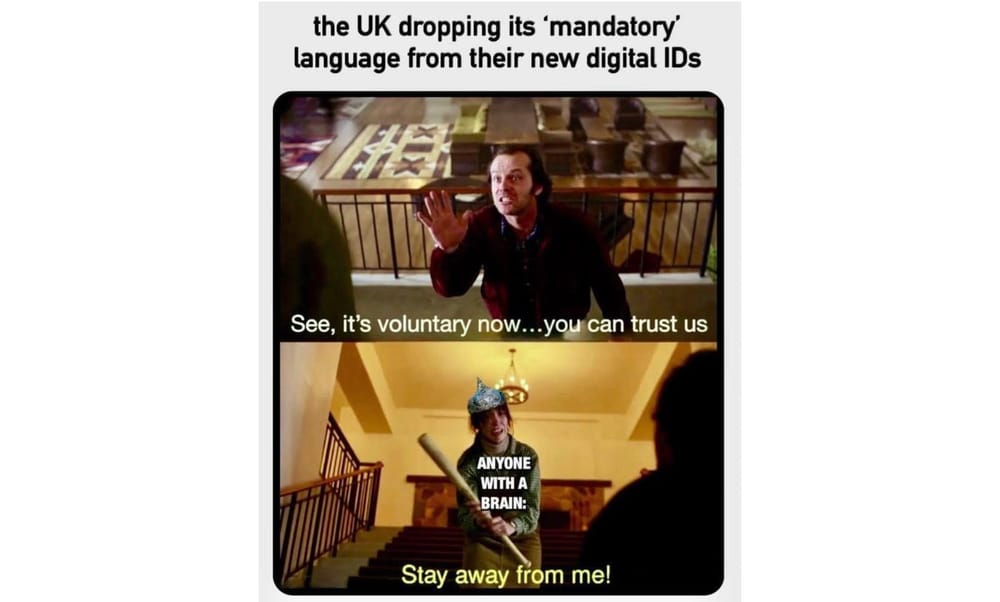
By now, you’ve probably heard: The British Labour government is not bringing in mandatory digital ID. Rejoice! The freedom-loving Brit can breathe easy again, safe in the knowledge that no one will be asked to wave some creepy state-issued QR code at the pub. Or the supermarket. Or the job center. Except, well…they sort of will.
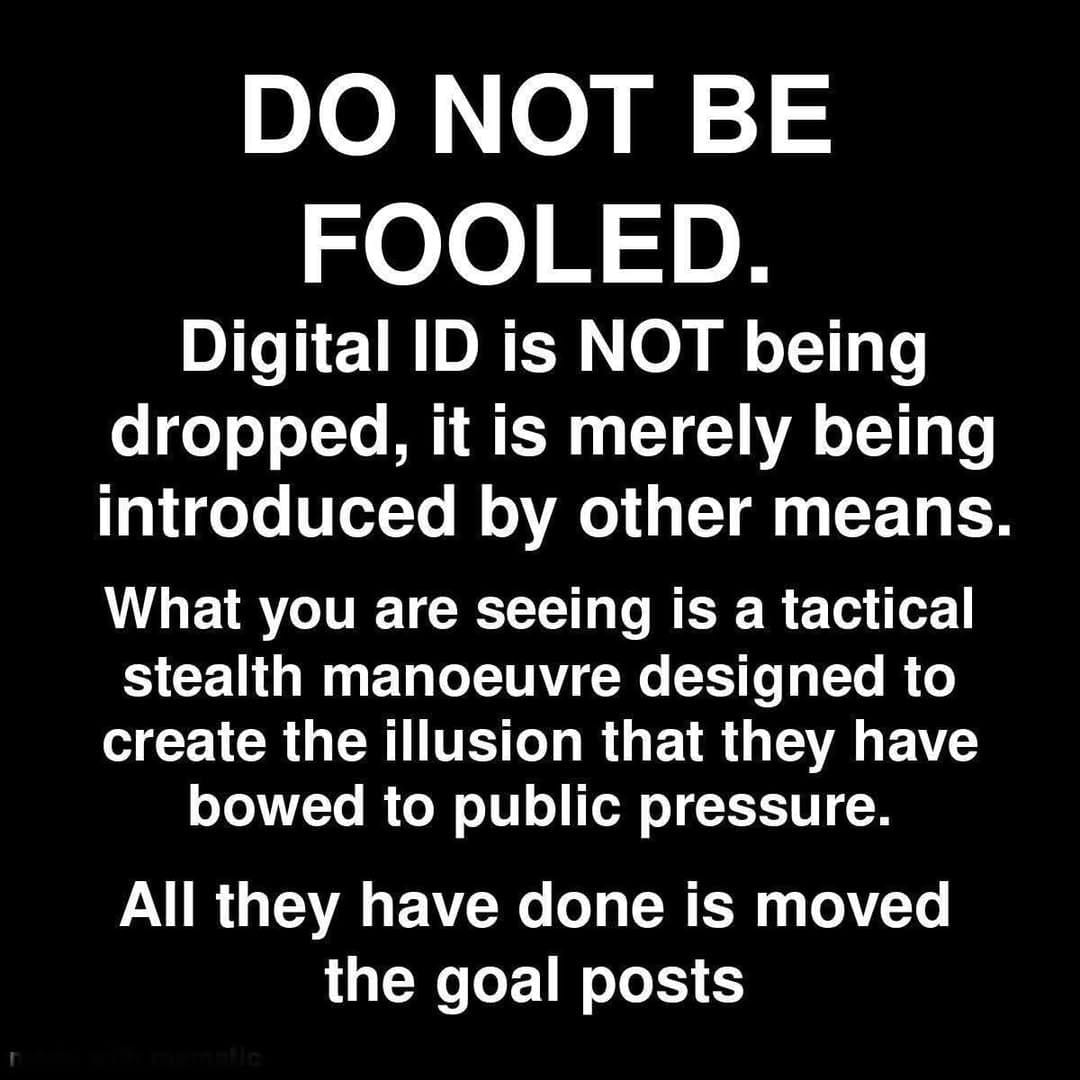
According to The Times, Labour is quietly yanking back the explicit demand for a national digital ID, but it’s the same way a magician might yank a tablecloth while keeping the cutlery exactly where it was.
They make it look like the plan has changed. But we’re still marching briskly into the warm digital embrace of compulsory identity checks.
No Digital ID? No Problem. You Still Can’t Work Without One
Let’s not kid ourselves. This isn’t about scrapping the system. It’s about calling it something else so the voters don’t kick up a fuss.
People will still be subject to what are being called “mandatory digital checks for right to work” under the current plans.
Reading more closely, a government source told The Times that “mandatory digital checks” are necessary. “There will be checks, which will be digital and mandatory,” Prime Minister Keir Starmer said today in the House of Commons.
Speaking to BBC Breakfast, Chancellor Rachel Reeves said: “We are saying that you will need mandatory digital ID to be able to work in the UK. Now the difference is whether that has to be one piece of ID, a digital ID card, or whether it could be an e-visa or an e-passport, and we’re pretty relaxed about what form that takes.”
And there it is. The oldest bureaucratic trick in the book: declare a system broken, then quietly replace it with something ten times more controlling, but dress it up as progress.
So you don’t have to carry a digital ID. It’s not mandatory. But if you want a job, you’d better have the digital credentials to prove your worth.
The Great Rebrand: Compulsion Without the PR Headache
One unnamed official even said this latest rhetorical pivot was designed to “deflate one of the main points of contention.” Avoid boiling the blood of the electorate even further by doing the same thing, just with softer language.
They added, “We do not want to risk there being cases of some 65-year-old in a rural area being barred from working because he hasn’t installed the ID.” How thoughtful.
This whole “mandatory checks” versus “mandatory use” semantic judo is precisely the kind of thing that gets ministers nodding sagely in Whitehall while everyone else wonders what planet they’re on.
They didn’t eat the cake; they just “redistributed its contents through direct oral engagement.”
The end result is the same. As soon as digital ID exists, people will be pressured into it.
Despite claims that digital ID can be optional, company directors in the UK are now being effectively forced to use it.
Under the Economic Crime and Corporate Transparency Act, from November 2025 all directors must verify their identity to legally act in their role, and the default method is via GOV.UK’s digital ID One Login system.
This government wants everyone on digital ID one way or another.
The truly galling part is that all of this is happening with the usual platitudes about “consultation.” A spokesperson said that ministers have “always been clear” that full details will follow “a full public consultation.” Which, in Westminster-speak, is usually code for: “We’ll tell you what we’ve already decided, then ignore your opinion,” just like they did with the debate over the new censorship law, the Online Safety Act.
Public support for digital ID has fallen sharply. When people really learn about the long-term consequences, they seem to wake up. Polling last year showed a steep drop in approval, and an online petition opposing the digital ID plan gathered almost three million signatures.
Make no mistakes about this new “non-mandatory” digital ID propaganda that’s out in the news right now. While they assure us that no one will require a digital ID, they’re building a world where not having one turns your daily life into a slow-motion punishment.
It’ll be coercion by inconvenience.
Welcome to the Slow Lane, Citizen
Take airports. In the United States, for example, you technically don’t have to use the biometric fast lanes. But try not using them. The people with facial scans and “trusted traveler” clearance breeze through like they’re on a travel ad.
Meanwhile, everyone else is funneled into a neglected, sluggish line patrolled by a single, visibly exhausted border agent.
The more you resist enrollment, the longer your wait. And since nothing says “security” like punishing the innocent for existing, the “random” secondary screening always seems to find its way to the folks who opted out.
The Transportation Security Administration in the US practically wrote the playbook: say it’s voluntary, then make the alternative unbearable.
Miss a flight or two because the manual ID lane moves slower than tectonic plates, and you’ll be scanning your irises faster than you can say “civil liberties.”
The Line is the Punishment
Here’s how it works: instead of making enrollment mandatory, they just make life worse for people who say no. Time becomes the cudgel. Every choice comes with a cost in minutes, hours, or lost opportunity.
Need to get into a venue? The express line is digital ID only.
Age Checks: The Digital Trojan Horse
It started with just adult content. Alcohol. Vaping. Gambling. Now it’s even to access to social media under some authoritarian regimes (we’re looking at you, Australia).
You name it; every move on the internet is suddenly a proving ground for your identity, tying everything you say and view to you real-world ID. Age verification laws arrive draped in moral concern, but underneath it all, they’re laying the tracks for a digital ID system no one asked for.
They’ll insist there are alternatives, right up until the moment there aren’t. Once a government digital ID exists, sites no longer need to dance around the issue.
They can simply require it. No upload option. No fallback. No fiddly workaround involving a photo of a passport taken on a cracked phone camera. Just a blunt message on the screen: verify with your government digital ID to continue. It will be framed as compliance, safety, or liability management.
Platforms will shrug and blame regulation. And that’s the trick. The state doesn’t have to force anyone to enroll when the internet itself does the job for them. Once digital ID exists, more places will demand it.
What about trying to buy a bottle of wine at a self-checkout? Stores will start pushing digital ID verification to make the process faster and easier.
Without a digital ID, you might as well ask to pay with pebbles.
Retailers are quietly re-engineering shopping so that identity is baked into the process. Self-checkouts won’t clear unless the system can scan you. Alcohol purchases will require digital approval. Manual lanes? Oh, they exist, all one of them, but the cashier is also covering returns, cleaning up aisle four, and having a nervous breakdown.
You’re not banned from shopping. You’re just herded toward the system that knows who you are and what you buy. For your convenience, of course.
Banking, Broken on Purpose
You can still have a bank account without a digital ID, technically. But the moment you want to transfer more than a bus fare, you’ll hit a wall.
Transaction limits will be lower. Payments are slower. Account freezes drag on for days unless you’re verified, at which point, everything resolves with miraculous speed. It’s like the difference between writing a check in 1972 and using Apple Pay.
People will just enroll. Not because they trust the system, but because they want to access their own money without feeling like a criminal on remand.
So, there you have it. No official digital ID. Just mandatory digital checks for work. Maybe housing. Maybe banking. But not a mandatory digital ID. Definitely not.
This is how it happens. Not with a diktat, not with a vote, not even with a proper debate. Just a slow, quiet redesign of daily life so that refusing the ID doesn’t make you brave. It makes you late, broke, locked out, and eventually invisible.
So no, digital ID isn’t always mandatory. But as soon as one is introduced, and you don’t have one? Enjoy waiting in line. You’ll be there a while.
Original Article: https://reclaimthenet.org/the-myth-of-the-uks-axed-mandatory-digital-id-plans
Fake Digital ID "Victory"
Iain Davis
UK social media was alight a couple of days ago (at the time of writing) with various individuals and groups congratulating each other, and even taking credit, for forcing the Labour government into an ignominious “climb-down” or embarrassing “U-turn” on digital ID.
A tiny gaggle of politicians patted themselves on the back for defeating the government, claiming “mandatory digital ID is dead.” Popular talking heads were thanking their “fellow activists” for showing the government what “people power really means” and various “independent media” figures were effusing about the successful “push-back against digital ID.”
The message came through loud and clear. If we act in unison, the government has to listen and respond. The representative democratic system works. TRUST THE SYSTEM!
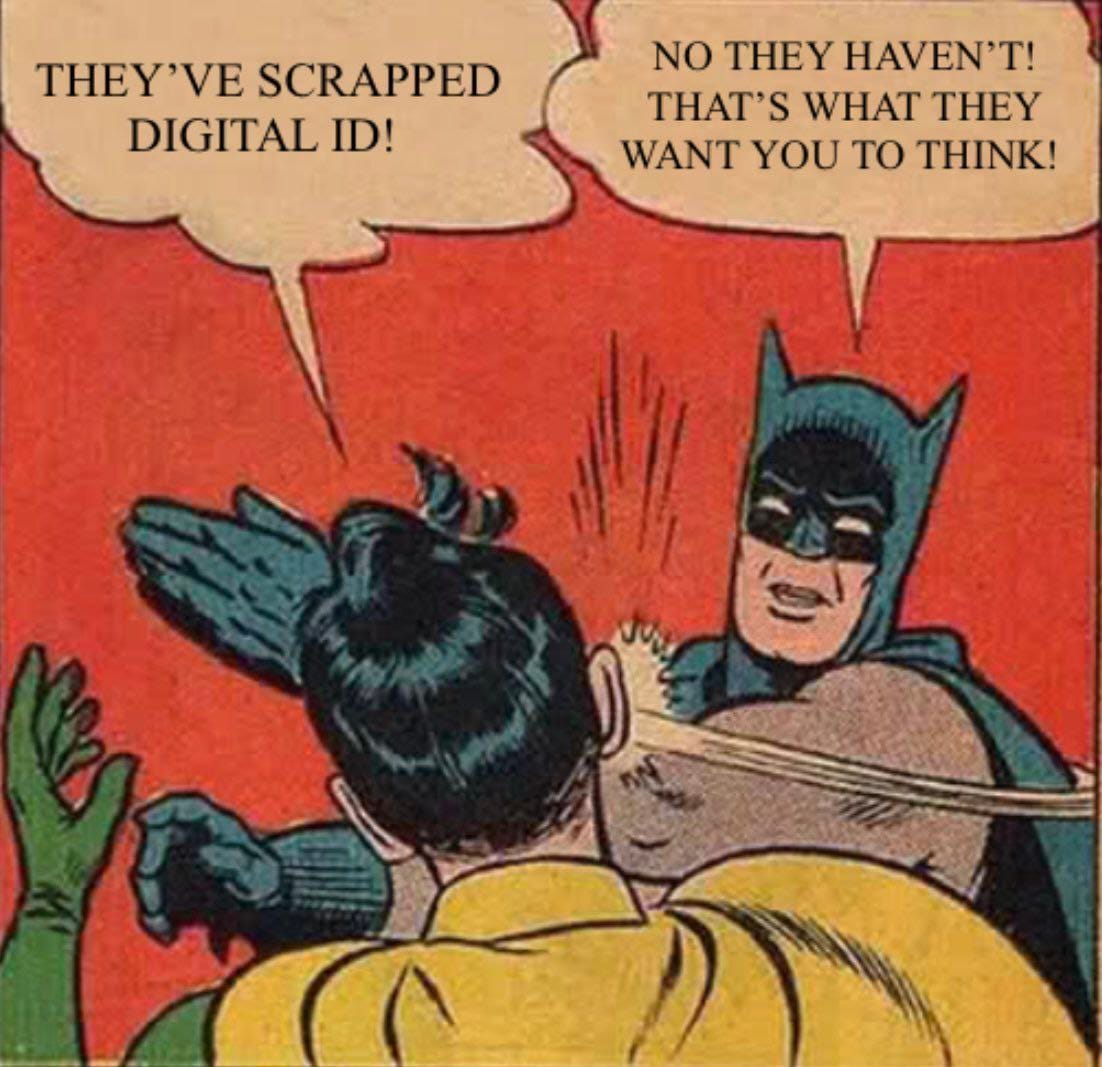
Unfortunately, celebration was a bit premature because the great movement of the people, the millions of petition signatures, theprotests and the stiff letters to MP’s have made no difference whatsoever to the government’s push to enforce digital ID—digital identity—on all of us.
Speaking the day after propagandists ran countless articles and reports claiming “mandatory digital ID” had been shelved, Prime Minister Keir Starmer told parliament:
There will be checks. They will be digital and they will be mandatory.
The mythical BritCard has been abandoned but, as I pointed outmore or less as soon as it was launched, the governments proposed mandatory digital ID—BritCard—was never a real thing. It was purely a propaganda construct and had nothing to do with the actual problem we face which is the interoperable digital identity system.
The video below which was recorded shortly before the stories about defeating BritCard were published. I discuss the true nature of digital identity with Ant Critchley from Becoming Stellify
By using the BritCard deception to misrepresent digital identity, the government provided the people with a loathed bogeyman they could easily defeat. The evident ploy was supposed to lull the people into accepting their digital identities by convincing them they had successfully rejected the fake BritCard version of digital ID. Hence all the misplaced celebration which arose solely in response to completely meaningless propaganda stories.
It is hard to say to what extent this propaganda strategy has worked. Who knows how many people imagine they won’t be subject to digital identity as a result? Clearly, a proportion of the population has not fallen for it but that didn’t stop some politicians trying to capitalise on the propaganda that served their interests.
On 27th September 2025, with regard to BritCard, I wrote:
The most likely outcome is that as anger is stoked and resentment swells, the completely unnecessary BritCard will be flung out along with the Labour government: again.
The door will then be open for the political saviours, be they the Tories, Reform or whomever, to come to power promising never to subject us to any more of these idiotic government issued ID schemes.
However, to keep pace with the digital revolution, our digital infrastructure, our cards and licenses, will need to be upgraded to facilitate the necessary interoperability.
Voila! We will rejoice in our victory and accept digital ID without even knowing it.
Low and behold, perhaps the most ridiculous claim of “victory” came from Nigel Farage who, representing Reform UK, said:
Keir Starmer has abandoned plans for the Digital ID to be compulsory. This is a victory for individual liberty against a ghastly, authoritarian government. Reform UK would scrap it altogether.
This was a monumentally facile PR win for Reform UK, or at least an attempt to gain that advantage. In truth, digital identity is a worldwide project backed by the entire global public-private partnership. Even if they were willing, which none are, no government—better described as functional oligarchies—can defeat the digital identity agenda.
Imposing digital identity on every human being on earth is United Nations SDG 16.9 for crying out loud. Do you really think that Reform UK can or will even try to overturn that?
We, on the other hand, can defeat real digital identity in the UK if we are serious about mass non compliance.
The video below. Ant Chritchley and I consider possible solutions. We discuss how The Politics of Obediencehas brought us to this point and how, if we accept it, digital identity will create state control mechanisms that will move the state beyond the need for propaganda, political authority or even law—the Agentic State.
Regardless of the stories the government and its partners want us to believe about digital ID, if we wish to retain what little freedom we have left, we have no choice but to defend ourselves against the impending tyranny of digital identity?
In the UK we have a written codified constitution—Magna Carta—which government refuses to acknowledge. We also have a legal copy—the Bill of Rights and other legal documents—masquerading as an uncodified constitution. Nonetheless, in the written codified constitution and in its cobbled-together legal simulacrum, there is an indubitable constitutional truth recognised and common to both: we are all equal before the law.
That we are all equal before the law is supposed to be the founding principle of our so-called “representative democracy.” Therefore, while we are peaceful and cause neither harm nor loss to any other person, all of us in the UK have the constitutional right to act freely absent any interference, molestation or punishment meted out by the government and its enforcers. Of course, we all know this is not what happens in reality.
The government—the executive, the legislature, and the judiciary—consistently ignores this founding constitutional principle of our allegedly democratic society. Instead, the government either pretends we have no constitutional right or freedoms or exclusively applies them only to itself using what we might call the Octavian Principle:
The Octavian Principle - the enduring institutional doctrine that constitutions, rules and safeguards are only invoked, respected, or defended when the personal interests, reputation, or security of those in power are at risk of exposure or disrepute.
Government asserts that it can “create or end any law.” That is to say, the government demands that we accept that it is more equal before the law than the rest of us. The Octavian Principle is exemplified by the governments unconstitutional and, therefore, apparently unlawful claim that “Parliamentary sovereignty is the most important part of the UK constitution.”
So which is it? Are we all equal before the law or is Parliament sovereign? We have the right to an answer because the suggested mutually exclusive contradiction cannot possibly exist in reality.
Private corporations are free to implement digital identity systems if they wish. Equally, we have the right not to use them.
If the corporate imposition of digital identity leaves those of us who do not consent unable to buy essential commodities—water, food, shelter, transport, energy, fuel—then the government must step aside while we build the parallel system we will need to survive. If it doesn’t, if it legislates or regulates to stop us building and operating that vital parallel system, then corporate diktat rules above the law and we are clearly not all equal before the law.
If the government maintains that we are all equal before the law, it cannot force us to use digital identity systems to which we do not consent. Government cannot lawfully deny us access to public sector services we pay for by compelling us to use digital identity gateways like One Login. If it does, and does not provide an alternative non-digital route, we are not all equal before the law.
If we are all equal before the law, the government must either provide means and ways for us to access essential public services, without using any form of digital identity, or must agree that we are exempt from paying—taxation—for services we cannot access.
If it doesn’t, and we are forced by some supposed legalmechanism to use either private or public digital identity systems without our consent, no matter what the government proclaims, we most assuredly are not all equal under the law.
If so, the whole edifice of purportedly democratic government is demonstrably nothing but a facade thinly veiling a public-private state dictatorship and we can all proceed on that clearly understood basis.
Source: https://iaindavis.com/fake-digital-id-victory/
Original Article: https://iaindavis.substack.com/p/fake-digital-id-victory



Comments ()