
The Pretense of Universal Surprise at U.S. Intervention Is Wearing Thin
Why We Keep Being Shocked: Maduro, Trump, and the Politics of Power in the Americas
GlobalResearch.ca | Rima Najjar
The Persistence of Surprise
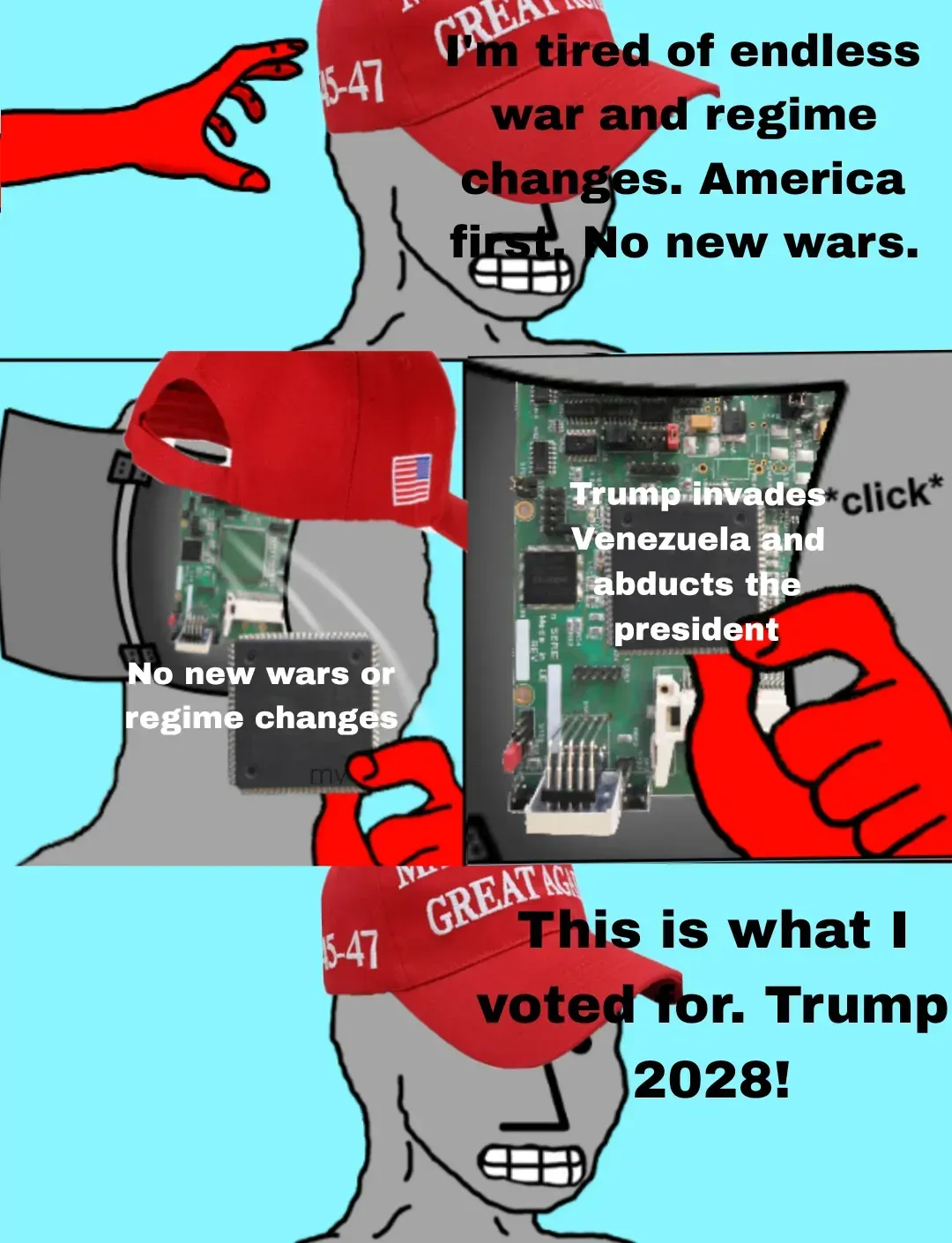
The ritualistic shock that greets each new American military intervention in the 21st century has become almost comical. It is perfectly understandable to be stunned by the scale and brazenness of the U.S. operation in Venezuela — the deployment of over 150 aircraft culminating in the seizure of President Nicolás Maduro and his wife on January 3, 2026. It is reasonable to marvel at how swiftly it succeeded and how little resistance it met, revealing the brittleness of regimes sustained more by bravado than genuine institutional support. Nor is it odd to still wonder how
Hugo Chávez, with his charisma and media mastery, managed for so long to obscure the accumulating institutional decay — the hollowed-out state, the collapsing oil-dependent apparatus, and the drift toward militarized governance — a fragility the Bolivarian system never corrected into durable institutions.
What strains credulity is the impulse to label this intervention “tragic, complex, extraordinary, and controversial,” rather than recognizing it as yet another familiar chapter in the U.S. playbook. Such a reaction betrays deliberate historical amnesia. It refuses to confront the enduring American doctrine of hemispheric dominance: a century-long pattern of unilateral action that runs unbroken from the 1823 Monroe Doctrine and the Roosevelt Corollary, through Cold War regime change in Guatemala, Chile, Grenada, and Panama, to the post-9/11 invasions of Afghanistan, Iraq, and Libya.
Continuity Without Uniformity
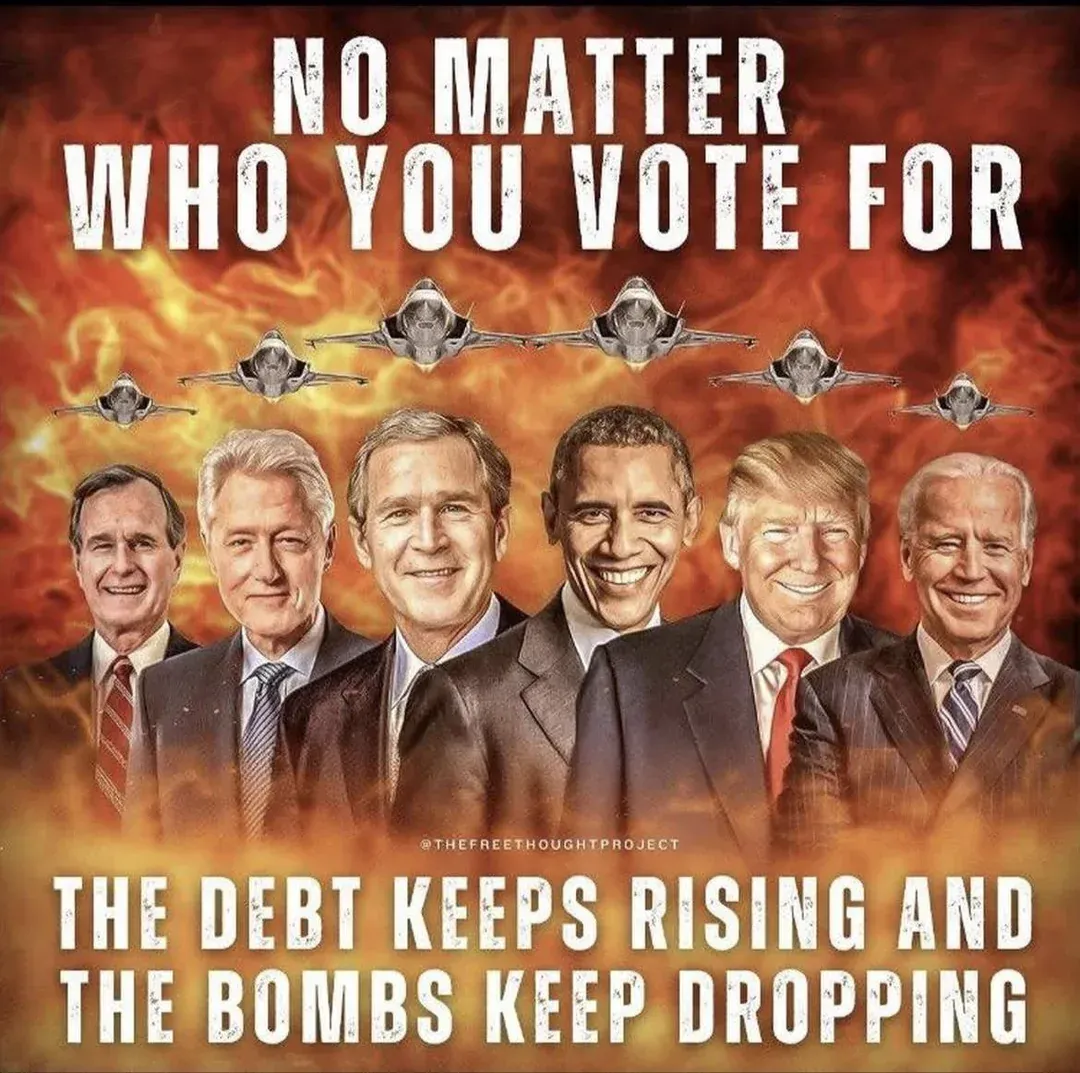
U.S. foreign policy has undergone major reorientations, codified in successive National Security Strategies — from the Obama administration’s emphasis on multilateralism and “strategic patience” to Trump’s explicit “America First” unilateralism. Those shifts produced real bureaucratic conflict and recalibrated the thresholds for intervention. What persists across them, however, is a durable claim of prerogative: the claimed right to dictate political outcomes in its self-proclaimed sphere of influence, by force whenever the political and strategic arithmetic allows. What should astonish us is not the intervention itself, but the endurance of our surprise, given the United States’ long record of a recurring sequence: intervention, regime removal, and predictable instability.
Manufacturing Exceptionality: Media, Memory, and Moral Fables
Beneath the public astonishment lies a more elemental force: humanity’s almost touching optimism bias — the quietly desperate conviction that this time, surely, the pattern might finally fracture, even as every precedent insists otherwise. That psychological need for hope weakens historical judgment, creating fertile ground for the deliberate erasure of memory.
Twenty-four-hour news cycles present each crisis as immaculately new, stripped of historical context, allowing the hard-won lessons of Grenada, Panama, Iraq, and Libya to slip quietly into obsolescence. In the hours and days following January 3, U.S. cable networks and major dailies exemplified this erasure. Fox News and allied outlets celebrated the operation as a triumphant strike against the “kingpin of a vast criminal network responsible for trafficking colossal amounts of deadly illicit drugs into the United States,” framing it as pure counter-narcotics enforcement rather than hemispheric power play. CNN and MSNBC, while more measured, still centered the narrative on unsealed indictments for narco-terrorism, cocaine conspiracy, and weapons charges — language that evokes domestic organized crime rather than sovereign-state confrontation — rendering the military dimension almost incidental. The spectacle of a blindfolded, handcuffed Maduro paraded aboard the USS Iwo Jima was replayed endlessly, yet rarely situated within the long U.S. history of extracting foreign leaders for trial.
This managed forgetting then receives its final reinforcement through moral simplification. Western audiences are offered neat binaries that erase the blend of social gains and authoritarian excesses in the records of figures like Hugo Chávez and Nicolás Maduro, reducing them to stock villainy and making the intervention appear self-evidently just. The indictment’s language — “partnering with some of the most violent and prolific drug traffickers and narco-terrorists in the world” — performs this work, recasting a polarized national leader as a cartoonish cartel boss whose removal needs no further justification.
Beneath that framing sits a deeper cultural faith: the belief in linear progress — the assumption that each new intervention must represent deviation rather than continuity, that the arc of history still bends toward restraint. Even critical outlets such as The New York Times or The Guardian, while acknowledging illegality or “dangerous precedent,” typically begin by conceding Maduro’s authoritarianism, softening the radicalism of unilateral force by anchoring it in the villain’s undeniable flaws. The effect is to treat the operation as a tragic exception in an otherwise improving order, rather than as the latest expression of a durable imperial doctrine. Through this sequence — hope, forgetting, simplification — the illusion is sustained: empire appears to act not from prerogative, but in reluctant defense of universal values.
Shock as Moral Resistance
And yet, even this managed forgetting does not fully succeed. The recurring shock that follows each intervention is far more than naïveté. It carries a stubborn, deeply human strength — an act of resistance, a deliberate refusal to release the world we were once promised. Reality keeps returning, merciless and unchanged, yet the refusal endures.
The same quiet defiance appears when Palestinians meet each new Israeli atrocity with fresh disbelief and renewed shock. They hold fast to hope for justice and intervention, knowing that to accept brutality as permanent would close the door on any different future.
In a parallel way, people across the Global South — and even some disillusioned voices in the West — still feel astonishment at the image of a sitting president pulled from his home at gunpoint, flown to Manhattan, and placed on trial for charges that seek to criminalize his entire rule. Despite the long-established pattern, this astonishment persists as an act of defiance. It refuses to accept the normalization of conditional sovereignty, where the final judgment of legitimacy is made not in Caracas, but in Washington. To stop feeling shocked would mean surrendering the moral conviction that another world remains possible — one where hemispheric dominance finally yields to genuine self-determination.
Selective Astonishment: Venezuela’s Social Fracture
Shock follows lines of history and experience.
Beyond the Western world — and among those long accustomed to the United States’ recurring hand in Latin America, from Grenada in 1983 to Haiti in 1994 — the reaction was markedly restrained. The most intense astonishment remained concentrated among Western publics still invested in the post–Cold War fiction of a rules-based international order. Across regions shaped for generations by intervention, the prevailing tone was quieter: a weary resignation threaded with enduring currents of resistance, expressed through grassroots organizing, insurgencies, solidarity networks, and popular defiance that have repeatedly confronted occupation and imposed rule.
Inside Venezuela, that uneven distribution of shock traced fault lines carved by decades of political polarization. Among pro-regime supporters — the chavistas duros, communal council loyalists, colectivo networks, and security cadres whose identities and livelihoods were bound to the Bolivarian state — the morning after carried the weight of existential rupture. Their grief and fury reopened older wounds: the trauma of the 1989 Caracazo, the memory of the 2002 coup attempt, and the long narrative of foreign siege. For these communities, January 3 registered as more than the removal of a president. It marked the collapse of a political project that had promised dignity, sovereignty, and protection from precisely the kind of intervention now unfolding.
The opposition moved through a different historical register. Veterans of the pre-Chávez order read the moment as the long-delayed implosion of Bolivarian rule. Younger activists shaped by the crushed protest cycles of 2014 and 2017 sensed the fragile opening of political space. Even here, however, reactions fractured. Business elites calculated opportunity. Grassroots organizers braced for another false dawn. Ordinary Venezuelans, hardened by years of crisis, met the moment with wary pragmatism, having learned that every proclaimed “transition” carries its own forms of violence, dispossession, and disappointment.
By January 5, the vacuum had consolidated around Acting President Delcy Rodríguez, Maduro’s longtime vice president and oil minister. Within hours of the capture, Venezuela’s Supreme Court — long aligned with Chavismo — transferred presidential authority to Rodríguez under Article 233 of the constitution, citing Maduro’s “forced absence” due to foreign aggression. Defense Minister Vladimir Padrino López and the high command quickly endorsed the move, while figures such as Diosdado Cabello, the powerful vice president of the ruling party and longtime Chavista enforcer, rallied the party base around continuity of the Bolivarian project. In her first address, Rodríguez denounced the U.S. operation as a “barbaric kidnapping,” affirmed Maduro’s legitimacy, and called for resistance and national unity against imperialism.
Within days, the posture shifted. Trump’s public vow that the United States would “run” Venezuela “very judiciously,” coupled with explicit threats that Rodríguez would “pay a very big price — probably bigger than Maduro” without cooperation, reshaped the terrain. Rodríguez formed dialogue commissions, invoked “peaceful coexistence,” and signaled conditional engagement with Washington. At the same time, Secretary of State Marco Rubio clarified that U.S. leverage would operate through offshore military pressure — including roughly 15,000 troops positioned in the Caribbean — and the looming prospect of further strikes, rather than through direct administration. Rodríguez now advances along a narrow corridor: accommodating U.S. demands over oil access and infrastructure while restraining hardline loyalists who interpret any concession as betrayal.
This interim Chavista arrangement collided head-on with the opposition’s narrative. María Corina Machado, the Nobel Peace Prize–winning leader of the anti-Maduro coalition, immediately called for Edmundo González Urrutia — widely regarded by the opposition as the legitimate winner of the contested July 2024 election — to assume the presidency and command of the armed forces. Opposition figures urged military defection and framed the moment as the long-awaited end of Bolivarian rule. Trump, however, dismissed Machado’s political leverage and chose instead to engage Rodríguez as a more manageable interlocutor, drawn by her ties to the oil sector and the promise of rapid stabilization without dismantling entrenched Chavista power networks.
What emerged was neither collapse nor renewal, but recalibration. Elite structures persisted under new constraints. U.S. prerogative set the outer boundaries of acceptable outcomes. Popular sovereignty remained visible yet increasingly conditional — contingent on external approval and on the willingness of domestic power elites (the military command, party leadership, courts, and economic interests) to comply with U.S. demands over oil access, security cooperation, political alignment, and the terms of Venezuela’s post-intervention order.
This recalibration exposes the mechanics of power under intervention. Political life reorganizes around an external center of gravity. Competing forces adjust their positions in relation to it. The range of possible choices contracts.
In this environment, the post–January 3 “transition” moves out of Venezuelan hands and into negotiations between domestic elites and external authority. Popular forces are left to absorb the consequences rather than shape the terms. Sovereignty remains, but only within new limits. Governance and legitimacy drift away from ballots and mass movements toward leverage, access, and compliance.
Power Recalibrated: January 5 and the World Beyond
By January 5, 2026 — with Maduro and Cilia Flores escorted under guard to Manhattan federal court — the global response had settled into a familiar tableau: outrage from adversaries, hedged pragmatism from allies, and quiet accommodation to U.S. primacy. That accommodation hardened as Trump vowed to “run” Venezuela, coupled with open threats toward Colombia and Mexico and growing speculation about Cuba’s impending collapse.
Adversaries moved quickly from denunciation to strategic recalibration. North Korea responded by accelerating missile launches and military drills, presenting them as preparation for “actual war” in a deteriorating “geopolitical crisis” — a blunt signal that the fate of a non-nuclear regime like Maduro’s only reinforces the centrality of deterrence. China condemned the operation as “hegemonic” and in violation of international law, demanding Maduro’s immediate release and warning of regional instability. Russia’s Foreign Ministry labeled the raid an “act of armed aggression” and an “unacceptable assault on sovereignty,” pressing for an emergency UN Security Council session — convened on January 5 but rendered inert by U.S. veto power. Cuba’s President Miguel Díaz-Canel denounced the operation as “state terrorism,” warning that the loss of Venezuelan oil subsidies placed his country’s economy in acute danger — a vulnerability Trump openly mocked, remarking that “Cuba looks ready to fall” without them.
Trump’s rhetoric extended the message well beyond Venezuela. He floated the prospect of “Operation Colombia” against President Gustavo Petro, accused Mexico of failing to control drugs and migration, and revived talk of acquiring Greenland for Arctic security. These pronouncements deepened the sense of conditional sovereignty across the hemisphere, compelling neighboring states into defensive postures: Colombia deployed forces along its border, while Mexico and Brazil issued sharp rebukes.
Regional reactions manifested along ideological lines. Left-leaning governments responded with alarm: Brazil’s Lula da Silva called the intervention a “very serious affront” and a “dangerous precedent,” invoking the darkest history of foreign interference; Mexico’s Claudia Sheinbaum declared it an “unacceptable line” had been crossed; Chile’s Gabriel Boric urged dialogue over force. Joint statements from Colombia, Spain, and Uruguay reinforced opposition to unilateral action.
By contrast, Trump’s allies celebrated. Argentina’s Javier Milei hailed the operation as a “victory for freedom,” El Salvador’s Nayib Bukele signaled approval online, and Ecuador’s Daniel Noboa framed it as a decisive blow against “narco-Chavista” structures.
European governments maintained their characteristic ambivalence. France’s Emmanuel Macron suggested Venezuelans might “only rejoice” at Maduro’s removal while criticizing the method as violating principles of non-use of force. Germany’s Friedrich Merz described the legal terrain as “complex.” Spain’s Pedro Sánchez rejected both Maduro’s rule and any intervention that breached international law. Meanwhile, the UN Security Council deadlock laid bare the paralysis of global institutions whenever U.S. strategic priorities collide with the Charter’s constraints.
The resulting pattern was unmistakable: disbelief and outrage where faith in post–Cold War norms still lingers; strategic hedging where U.S. power has long shaped outcomes. For non-nuclear states living under the Monroe Doctrine’s shadow, the recalibration is stark — alignment, vulnerability, or defiance under threat of extension. Nuclear powers such as Russia and China respond by hardening deterrence doctrine. Across the hemisphere, the message is absorbed: sovereignty remains provisional, now enforced through precision force and amplified by presidential spectacle.
After the Illusion
The deeper legacy of January 3 lies in the lesson already absorbed worldwide. Nuclear-armed states now see deterrence as existential. Non-nuclear states confront a harsher calculus of alignment or vulnerability. And those living under the Monroe Doctrine’s shadow — in Latin America, and in places like Palestine where sovereignty has long been treated as provisional — recognize in the January 3 operation the same enduring pattern of U.S. power they have confronted for decades.
The operation also imposed a form of political humiliation whose impact reaches far beyond Venezuela. As with the televised capture of Saddam Hussein, the spectacle addressed an entire region as much as an individual regime.
That spectacle reached its zenith hours after the extraction, when President Trump personally posted a photograph on Truth Social showing Nicolás Maduro — dressed in a gray Nike Tech sweatshirt and sweatpants, blindfolded with what appeared to be blackout goggles or a dark band over his eyes, handcuffed, and clutching a plastic water bottle — aboard the USS Iwo Jimain the Caribbean. The caption read simply: “Nicolas Maduro on board the USS Iwo Jima.” Shared minutes before Trump’s Mar-a-Lago address announcing that the U.S. would “run” Venezuela pending a “safe, proper and judicious transition,” the image spread instantly across global networks. Its visual language unmistakably echoed the degrading photographs of Saddam Hussein’s 2003 capture and Manuel Noriega’s 1989 surrender. Even many opponents of Maduro recoiled at the optics: a sitting head of state extracted in his sleep, stripped of agency, and displayed like a trophy before due process.
The staging deepened the psychological wound. For Chavistas and many ordinary Venezuelans, the image condensed decades of perceived siege — the 2002 coup attempt, economic warfare, sanctions — into a single, visceral symbol of subjugation. Protests erupted in Caracas, U.S. flags burned, and chants demanding Maduro’s release filled the streets. Loyalists gathered outside Miraflores Palace, their grief laced with fury at the public stripping of national dignity. In the opposition and the diaspora — especially in South Florida’s “Doralzuela” — celebrations mixed with unease: relief at the fall of authoritarian rule tempered by the recognition that sovereignty had been conditional all along, now rendered in viral form.
The photograph functioned as theater of power — low on visible violence, high on symbolic domination. The blindfold and restraints, unnecessary after capture, maximized humiliation. As with Saddam’s emergence from the spider hole or Gaddafi’s bloodied final moments, the image spoke not only to Maduro but to every leader in the region tempted to challenge U.S. prerogative. The message was unmistakable: resistance invites not only removal but public diminishment. Even those who welcomed the fall could not escape the corrosive broadcast — that sovereignty in the Americas remains, in practice, a revocable grant.
Alongside the strategic lesson came an emotional one. For many across the region, the image carried a weight of collective shame — not necessarily because they supported the fallen leader, but because it struck at something shared: dignity, historical standing, how one’s people are seen and situated in the world. The same reaction was widely documented in the Arab world after Saddam’s capture: even fierce opponents of his rule described a sense of exposure, of being diminished before the world. Alongside fear and the strategic recalculations of governments and political elites — over alliances, deterrence, policy direction, and survival itself — the politics of humiliation operate through the quieter, more corrosive injury of wounded collective identity.
The pattern has not been broken; it has evolved. What once required coups or invasions can now be achieved through precision strikes and criminal indictments. Empire no longer needs moral disguise.
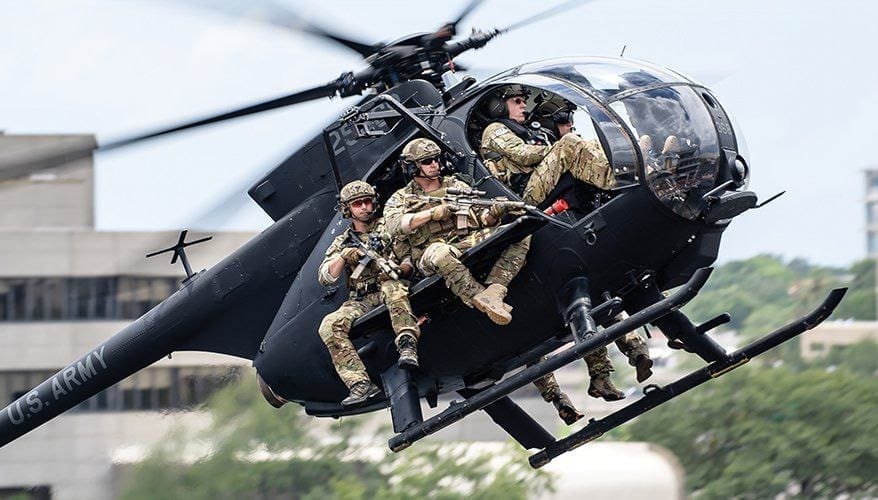
The operational anatomy of January 3, 2026 — codenamed Operation Absolute Resolve — exemplifies this refined imperial template. Months of CIA and Joint Special Operations Command preparation produced a granular portrait of Maduro’s existence: his movements, meals, clothing, and even pets. A covert CIA team had operated inside Caracas since at least August 2025, aided by a human source close to the president. U.S. forces rehearsed the extraction on a full-scale replica of Maduro’s compound — a “very highly guarded fortress,” officials said — echoing the Abbottabad mock-ups used before the bin Laden raid.
When the moment came, more than 150 aircraft launched from twenty bases. Strikes neutralized Venezuelan air defenses and blacked out parts of Caracas. Delta Force operators breached the compound, engaged in brief firefights, and extracted Maduro and Cilia Flores within minutes. By 3:29 a.m. Eastern time, they were aboard the USS Iwo Jima. Zero American deaths. Limited collateral. Maximum message.
This clinical minimalism lowers the domestic political cost of intervention while amplifying global spectacle. Empire now delivers precision violence that appears restrained even as it broadcasts conditional sovereignty to the hemisphere.
Inside the United States, the operation ignited familiar polarization. Republicans celebrated law-and-order triumph; Democrats condemned unconstitutional adventurism. South Florida’s Venezuelan diaspora filled the streets with flags and chants. Anti-war protests surged across major cities. Yet across that divide ran the same selective astonishment — the belief that U.S. power can still be exceptional when convenient, rather than the durable doctrine of hemispheric dominance it has always been.
We are entering a world in which the pretense of universal surprise at U.S. intervention is wearing thin, even as selective shock endures. The question is no longer whether the pattern will continue, but how long the rest of the globe can afford to accept it.
Original Article: https://www.globalresearch.ca/maduro-trump-politics-power-in-the-americas/5911184
Comments ()