
The Roundup Deception: How Monsanto Helped Write the ‘Science’ That Claimed its Weedkiller Was Safe
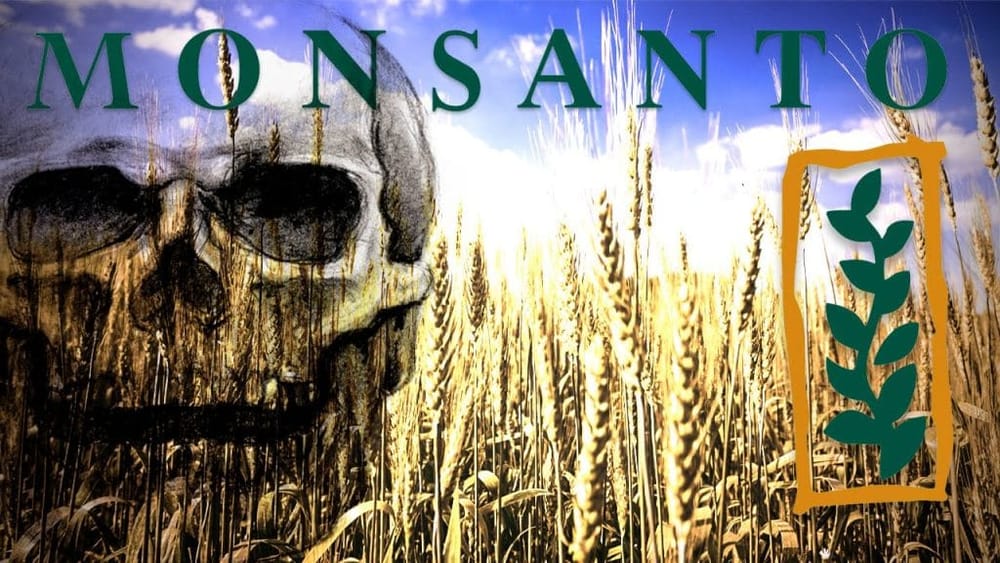
DavidIcke.com | Roger Mallett
For more than two decades, one scientific paper has been used to reassure regulators, farmers, gardeners, and the public that Monsanto’s bestselling weedkiller, Roundup, was safe. That paper has now been formally retracted by the journal that published it, citing serious ethical concerns and evidence that Monsanto itself helped write the research while presenting it as independent science. The retraction exposes a disturbing pattern of corporate influence, manipulated evidence, and regulatory failure, raising urgent questions about the safety of glyphosate and the credibility of the global system supposedly protecting public health.
In April 2000, the Regulatory Toxicology and Pharmacology journal published a sweeping review with a reassuring title: ‘Safety Evaluation and Risk Assessment of the Herbicide Roundup and Its Active Ingredient, Glyphosate, for Humans’. The message could not have been clearer. According to the authors, glyphosate essentially posed no cancer risks, no reproductive risks, and no adverse effects on the development of endocrine systems in people or animals. For Monsanto, the manufacturer of Roundup, this paper was pure gold. It was cited repeatedly by regulators around the world and became a cornerstone of the company’s defense against mounting scientific evidence and legal claims linking Roundup to cancer.
Crucially, the paper appeared to come from independent scientists. None of the listed authors worked for Monsanto. That apparent independence gave the conclusions enormous credibility. Regulators relied on it. Industry groups promoted it. It was referred to hundreds of times in the scientific literature. For years, it helped shape the global narrative that glyphosate was safe.
But behind the scenes, a vastly different story was unfolding.
Ghost writing and the Illusion of Independence
Internal Monsanto documents, made public through cancer lawsuits in the United States, reveal that company employees played a central role in producing the paper. Emails suggest Monsanto scientists helped to collect data, draft text, review arguments, and manage relationships with the named authors. One company official openly celebrated the publication as the result of years of “hard work” by Monsanto staff, even listing the employees involved. Another executive suggested rewarding those contributors with Roundup-branded polo shirts as a thank-you for a job well done.
Perhaps most damning of all is an email from 2015, in which a Monsanto scientist openly referred to the paper as an example of ghostwriting. He suggested that the company could again write a paper internally and pay outside academics to edit it and put their names on it, adding, “Recall that is how we handled Williams, Kroes and Munro, 2000.” In other words, the supposedly independent review that reassured the world about glyphosate’s safety was, at least in part, written by the very company that stood to profit from it.

This is not a minor technical breach. Ghostwriting strikes at the heart of scientific integrity. Science relies on transparency about who designed, conducted, and interpreted research. When a corporation with billions of dollars at stake secretly shapes the conclusions of a paper, while presenting it as independent scholarship, the public is being misled.
The journal’s editor-in-chief, Martin van den Berg, has now acknowledged this. In retracting the paper, he cited serious ethical concerns about the independence and accountability of the authors, misrepresentation of contributions, potential conflicts of interest, and damage to academic integrity. He also noted another crucial flaw: the paper’s conclusions about cancer risk relied solely on unpublished studies supplied by Monsanto itself, while ignoring other published research that raised concerns. This selective use of evidence tilted the conclusions in the company’s favor.
The Close Relationship Between Industry and Regulators
The timing of the retraction is striking. It comes 25 years after publication, and eight years after the ghostwriting emails became public in court. During that time, the paper continued to be cited uncritically in research, government reviews, and even online reference sources. Scholars have shown that it influenced hundreds of academic papers and numerous regulatory decisions. A flawed, industry-influenced article became embedded in the scientific and policy landscape, shaping decisions that affected millions of people.
Monsanto, which was bought by Bayer for $63 billion in 2018, insists that its involvement was properly acknowledged and that regulators worldwide agree glyphosate is safe. Government regulatory agencies, such as the United States Environmental Protection Agency and Health Canada, claim they did not rely on this specific paper alone and reviewed many other studies. Yet this defense misses the point. Regulatory systems often give increased weight to review papers that appear comprehensive and authoritative. As such, when such a paper is compromised, it can bias the entire assessment process.
Moreover, the broader scientific debate over glyphosate has never been settled. In March 2015, the International Agency for Research on Cancer (IARC), part of the World Health Organization (WHO), officially classified glyphosate as “probably carcinogenic to humans.” That conclusion was based largely on animal studies and evidence of genetic damage, and it stands in stark contrast to the reassuring claims promoted by Monsanto and its stakeholders. At the same time, glyphosate use has exploded worldwide. It is now the most widely used weedkiller on the planet, sprayed on crops, in parks, along roadsides, and in home gardens. This means that a considerable proportion of the global population is exposed to it.
The retraction also highlights a deeper problem: the close relationship between industry and regulators. Companies like Monsanto have long understood that controlling the scientific narrative is as important as controlling the product. By funding studies, influencing reviews, and shaping what regulators see as “the weight of evidence,” they can delay or dilute meaningful action, even in the face of genuine risk. When journals fail to act promptly, and regulators continue business as usual, public trust is eroded.
Image: Source

Original Article: https://davidicke.com/2025/12/21/the-roundup-deception-how-monsanto-helped-write-the-science-that-claimed-its-weedkiller-was-safe/
Comments ()