
Tokenization: The "Trivergence" Of Blockchain, AI And The Internet Of Things Will Tokenize Everything And Everyone In A Dystopian World
The Wine Press | thewinepress.substack.com
"We're not spending enough time talking about how quickly we're going to tokenize every financial asset and the opportunity we're going to have to have a digital wallet," said BlackRock's Larry Fink.
Over the last several issues of Revive The Table, [links below] we’ve discussed the concept called tokenization, the process of digitally representing physical assets and money as programmable, permissioned tokens stored on blockchain ledgers.
To recap, in the last edition of RTT1 we looked at remarks given by BlackRock CEO Larry Fink, who has been championing the necessity of tokenization for years. In his annual letter to investors, Fink succinctly explained what tokenization is:
“What exactly is tokenization? It’s turning real-world assets—stocks, bonds, real estate—into digital tokens tradable online. Each token certifies your ownership of a specific asset, much like a digital deed. Unlike traditional paper certificates, these tokens live securely on a blockchain, enabling instant buying, selling, and transferring without cumbersome paperwork or waiting periods.
“Every stock, every bond, every fund—every asset—can be tokenized. If they are, it will revolutionize investing. Markets wouldn’t need to close. Transactions that currently take days would clear in seconds. And billions of dollars currently immobilized by settlement delays could be reinvested immediately back into the economy, generating more growth.”
Notwithstanding, a tokenized world requires “a new digital identity verification system,” Fink wrote, adding that “championing tokenization alone won’t suffice. We must solve digital verification, too” - which is what we’ve examined in previous editions of RTT and is also rapidly being ushered in around the world, especially by the Trump administration.
More recently, Fink proclaimed2 to the world “we’re just at the beginning of the tokenization of all assets, from real estate, to equity, to bonds, across the board.” When Fink says all, he means all: currency, stocks, bonds, exchange-traded funds (ETFs), precious metals, commodities, real estate, food and water, medicine and health markets, carbon, supply chains, contracts, deeds, artwork, votes, digital ID, and more.
Just a few weeks after making these remarks, Fink reiterated just how fast this process of tokenization will take place. In October, the Saudi Arabian Mega Investment Summit,3 often described as “Davos in the Desert,” held a roundtable discussion featuring JP Morgan CEO Jamie Dimon, Blackstone CEO Stephen Schwarzman, Goldman Sachs CEO David Solomon, and many more. Fink told the panel and audience:
“I think we spend so much time talking about AI. We're not spending enough time talking about how quickly we're going to tokenize every financial asset and the opportunity we're going to have to have a digital wallet and moving ETFs and other things through a digital wallet, and I think that's going to happen worldwide very rapidly, and I think most countries are ill-prepared for that.
“I underappreciate how technology is changing that, not unlike how technology is changing AI and other things. It will be changing the technology around the plumbing of finance.”
Having looked at what tokenization is, what will a tokenized world and economy look like? How will this new “plumbing” function?
In a since-deleted article published on CoinTelegraph4 in 2021, Don Tapscott,5 a prolific Canadian author of 19 books, founder of the Blockchain Research Institute, and named one of the world’s most important living management thinkers by Thinkers50, wrote a revealing piece that explained, as Fink calls it, how “the plumbing of finance” will operate and what this new world is transforming into.
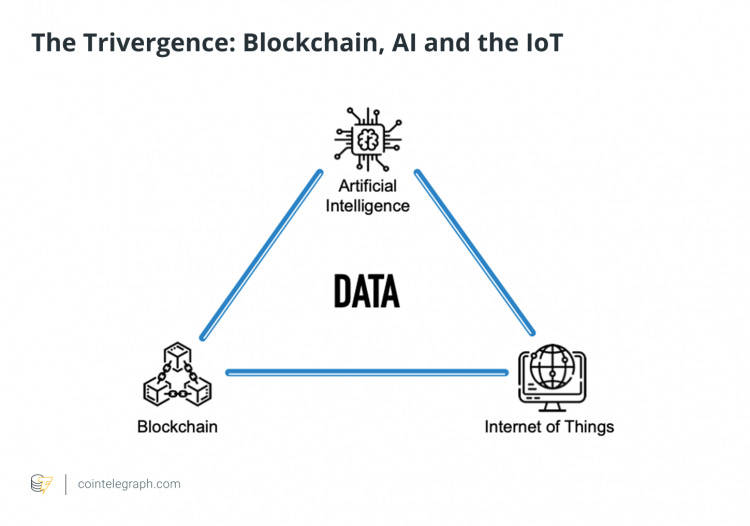
As we move away from old, antiquated, ‘dumb’ technologies, the world is quickly undergoing the so-called “4th Industrial Revolution,” as dubbed by World Economic Forum founder Klaus Schwab. Tapscott calls it the “Trivergence,” the convergence of AI, blockchain (tokenization), and the Internet of Things (IoT). Tapscott says, “to paraphrase 1 Corinthians 13:13, now these three things remain: AI, blockchain and the IoT. But the greatest of these in none — it is their combination.”
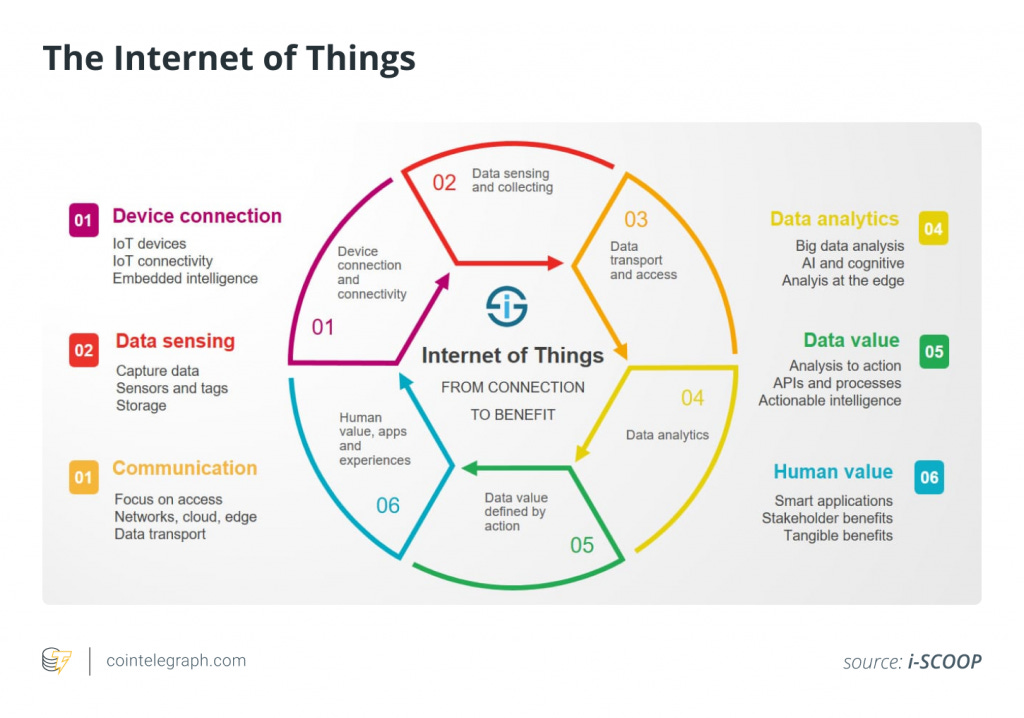
IoT refers to the connectivity of everything. Tapscott wrote:
“The Internet of Things describes the growing connectivity of everyday objects and the physical world to the internet. The proliferation of wireless sensors and smart devices is giving rise to a seamless computational network that connects every living being and inanimate object on the planet into a global Internet of Everything.
“Today’s IoT applications range from the mundane — such as your fridge ordering milk from Amazon — to the miraculous, like internet-connected glucose monitors that remind diabetes patients to take their insulin, all while permitting physicians [AI] to monitor their condition in real-time.”
Think back earlier this year when HHS Secretary Robert F. Kennedy Jr. redefined6 “Make America Healthy Again” (MAHA) to also mean “Make America Biotech Advance” (MABA),” and promoted wearables7 to track Americans’ biomarkers, along with telehealth and AI agentic doctors, and digital health IDs.8 This is all included in the IoT. Moreover, anything with the acronym “SMART” attached is IoT; as SMART stands for "Self-Monitoring, Analysis and Reporting Technology, which means these technologies track and communicate a wide array of data with each other.
All of this and more, combined with AI systems and algorithms, and then tokenized and stored on blockchain ledgers, comprises the Trivergence and the new world. Taspcott eerily wrote:
“Over time, the Trivergence will usher in a next-generation internet where nearly every animate and inanimate object on Earth generates data, a distributed ledger records and secures this data and AI analyzes the data, communicates with the objects, alerts their owners and continuously adjusts and improves the efficiency of the economy and the sustainability of its effects on the environment.
“[…] With blockchain added, connected people, devices and organizations can do far more than communicate: They can perform transactions, create markets and trust each other. […] Subject to benign governance, we can use this power to make better decisions and take better actions that sustain the planet — all in a secure, encrypted and entity-to-entity manner.”
“New business models enabled by this Trivergence are beginning to disrupt many industries and provide platforms for innovation in the economy for decades ahead. This second era has weighty implications for every business, government and individual, as well as technology strategy, architecture and leadership. If we can overcome the dark side [probably not by design]— and that’s a big “if” — this Trivergence helps us reclaim our digital identities, effectively fight climate change and help solve some of the world’s most intractable problems.”
Tapscott never does define what the “dark side” is, but I think we can use our own imaginations…
Tapscott lists a number of specific examples of the trivergence in action, from tracking “the world of physical assets, from auto parts in manufacturing supply chains to infrastructure assets like roadways, pipelines, bridges and buildings,” to how “distributed sensors can monitor everything from hospital equipment and international cargo shipments to faults in bridges and buildings, sniff out pesticides and pathogens in food, or even “recognize” the person using them and adapt accordingly.”
He describes how modern cars are perfect examples, noting how a consortium of auto manufacturers are already designing “a blockchain-based vehicle identification system that will enable drivers to pay highway tolls and parking fees automatically. He adds, “The proposed system will assign digital IDs to individual vehicles and record details such as ownership information and service history on a blockchain. Data covering the lifetime of the vehicle will help to identify cars on the road, enabling their owners to purchase goods and services automatically without the specialized tags or transponders required in today’s electronic tollbooth systems.”
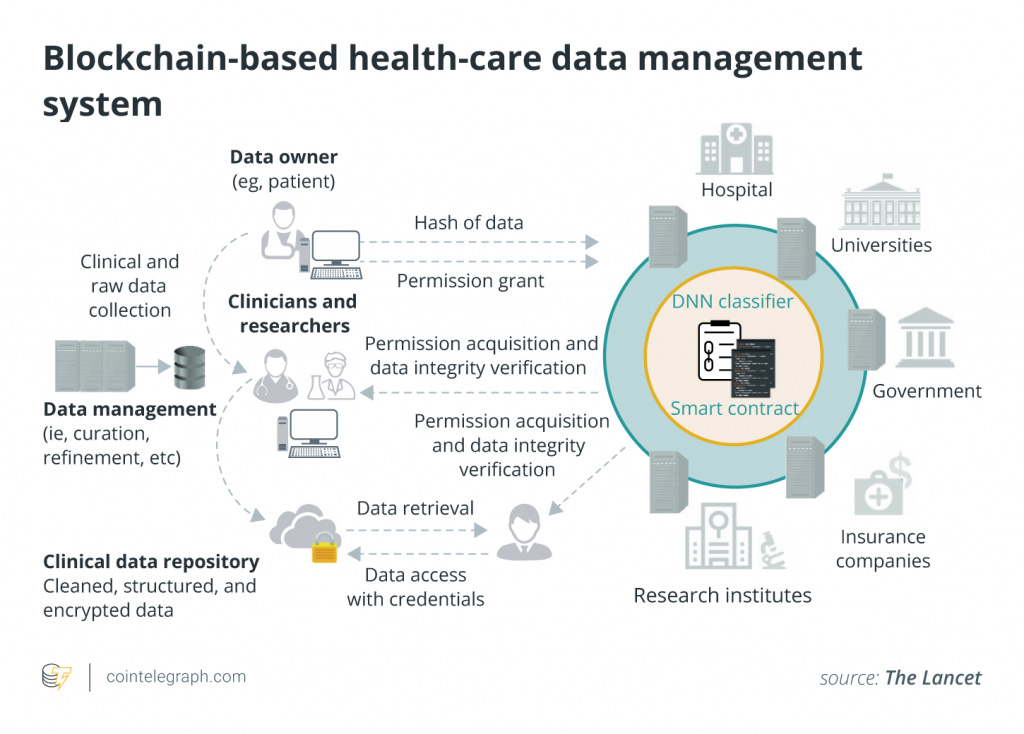
The same logic applies to the healthcare system. With tokenized health data collected from IoT devices and environment, AI will then be able to create a more tailored approach because the algorithm will know your vitals, habits, consumption, etc. “Blockchain could also facilitate better digital rights management in medical research such as enforcing rules about who owns and can see DNA data,” he wrote.
Food is another big one. The trivergence would enable “managers to measure everything from water and natural gas flows to urban infrastructure, transportation networks and agricultural supply chains,” Tapscott noted.
“Chronologically recording each step of a food item’s journey on a blockchain makes the complete history and current location of the food item along with its information (i.e., food processing methods, certifications, test data, storage temperatures, shipping details, expiration dates and, for some food products, soil quality and fertilizers) readily available in seconds.”
The United Nations has proposed doing something identical with blockchain to combat “food fraud,” per a 2021 report9 titled “Food Fraud: Intention, Detection and Management.” Earlier this year, an author for CoinTelegraph10 said “when deployed rigorously and realistically, blockchain could prevent this shadowy crime.”
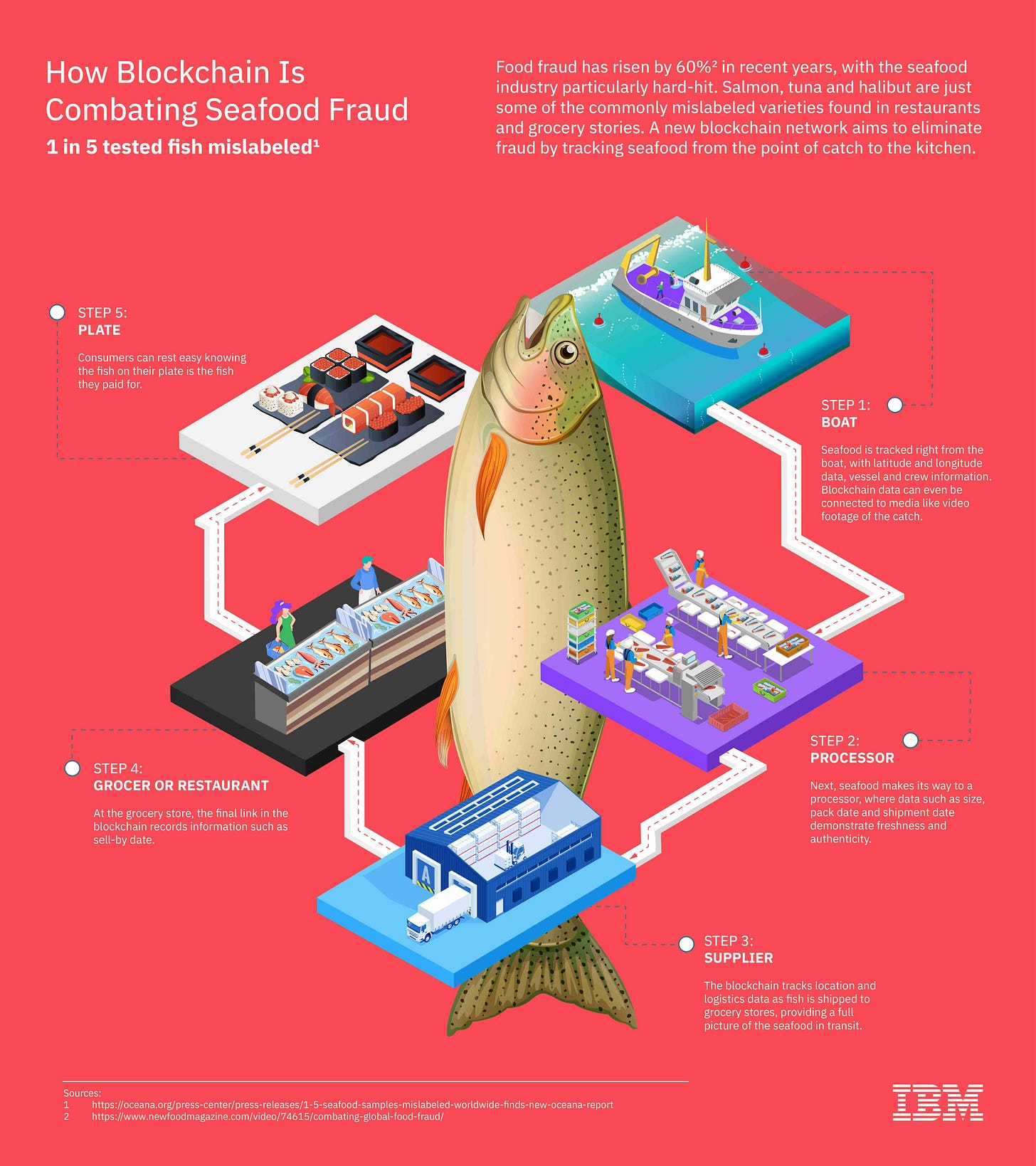
Some companies are already beginning to deploy this practice. In 2021, the Global Seafood Alliance published a report11 touting how blockchain and DLT can “reduce fraud and differentiate products.” Nova Sea, one of the largest salmon farmers in Northern Norway, announced that it joined the Norwegian Seafood Trust — a national seafood tracking network powered by computing giant IBM. IBM produced a chart that explains the five steps of tokenization:
Step 1: Seafood is tracked right from the boat, tracking latitude and longitude data, vessel and crew information. Blockchain data can even be connected to media like video footage of the catch.
Step 2: Next, seafood makes its way to a processor, where data such as size, pack date and shipment date demonstrate freshness and authenticity.
Step 3: The blockchain tracks location and logistics data as fish is shipped to grocery stores, providing a full picture of the seafood in transit.
Step 4: At the grocery store, the final link in the blockchain records information such as sell-by date.
Step 5: Consumers can rest easy knowing the fish on their plate is the fish they paid for.
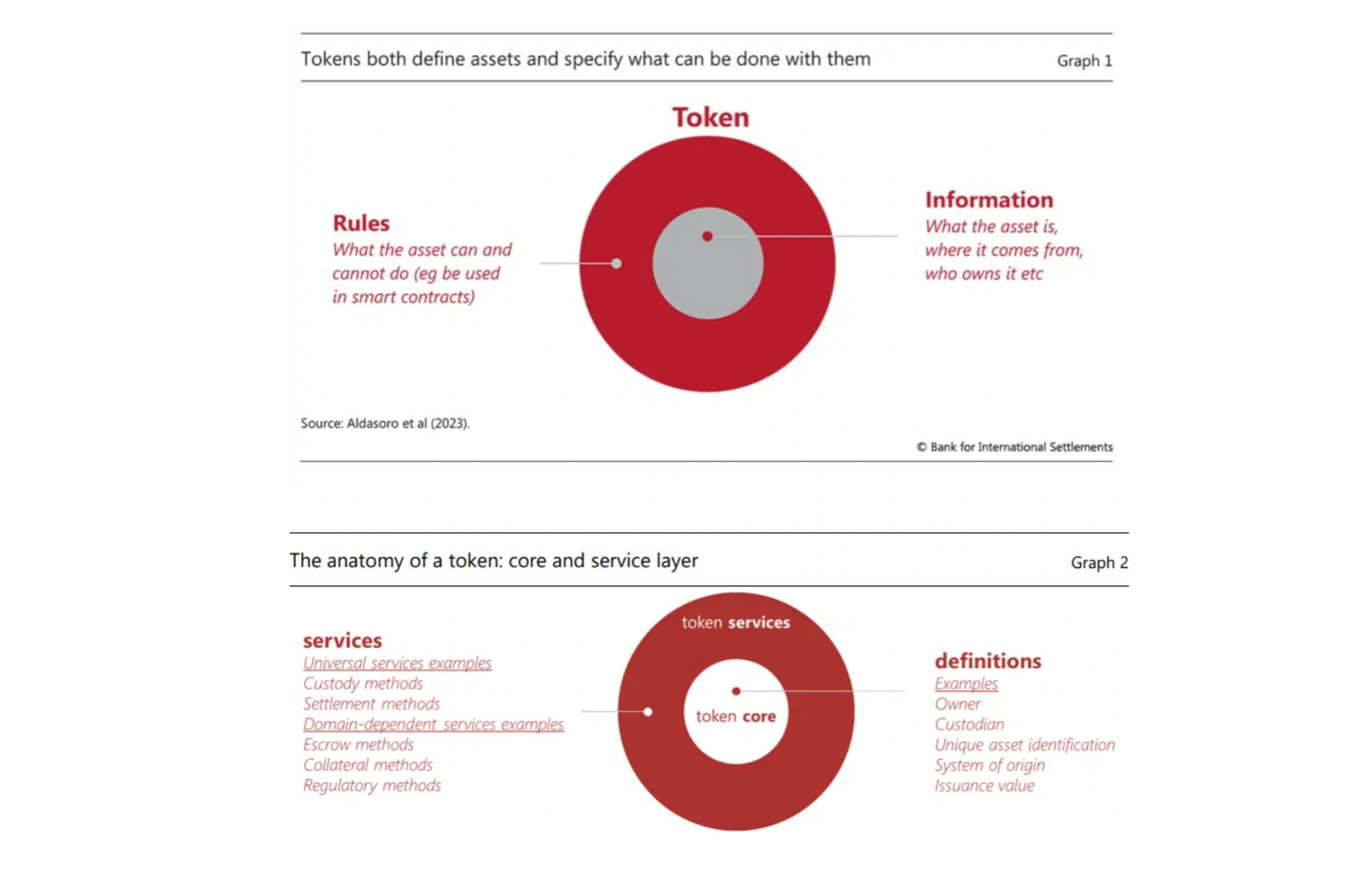
Digital IDs are tokens in themselves, too. Fink has already hinted at this before, but others in the space are getting more open about their ambitions. During an International Monetary Fund (IMF)-World Bank Summit held by the Atlantic Council12 in October, Siddharth Tiwari, a fellow at the Bank for International Settlements (BIS), the “central bank for central banks,” told the panel we will all be tokenized in 15 years (though I think he is being a bit liberal with that estimate).
“The BIS is looking at something called a unified ledger. […] So tokenize public money, CBDC, tokenize bank deposits, tokenize the equity market to serve as collateral that you can get credit with. And so as you go down the line, once it gets tokenized, it’ll be super efficient. I have no doubt you and I will get tokenized in 15 years.”
The list of tokenization examples is endless. For example, in June, the United Kingdom published a report13 on the future of policing, called “the Police Emerging Science and Technology Trends (PESTT),’ and in it discussed policing blockchain networks, cryptocurrencies and non-fungible tokens (NFTs) traded on those blockchains. The dystopian document even gets into potentially deploying new police tech to track brainwaves, for both criminals and the police themselves in the years to come! “In the future, a broader range of data could be fed into AI models to identify people, including data from typing on smartphones and keyboards, and new types of biological markers, such as heart rate, body odour and even brainwaves,” the report predicts.
Back in February, Larry Ellison, the second richest man in the world, CTO and founder of Oracle, told the World Governments Summit14 that he wants to collect everyone’s most private and intimate data, and feed it to AI data models to be accessed at the ready. “[…] We have to take all of this data we have in our country and move it into a single, if you will, unified data platform […] We need to unify all of the national data, put it into a database where it’s easily consumable by the AI model, and then ask whatever question you like.”
But that isn’t even the worst of it. At a self-hosted Oracle event in 2024, Ellison described15 how AI will be spying on everyone, everywhere, at all times, even in the most sensitive of places.
“The camera is always on, you don’t turn it on and off. The way you turn it on - you can’t turn it off you [but you are] going to the bathroom - ‘Oracle, um, I need two minutes to take a bathroom break and we’ll turn it off.
“The truth is we don’t really turn it off. What we do is we record it so no one can see it, but no one can get into that recording without a court order, so you get the privacy you requested, but if you get a court order - a judge can look at that, this so-called bathroom break.
“I’m going to lunch with my friends. ‘Oracle, I need an hour of privacy with lunch with my friends.’ God bless, we won’t listen in, unless there’s a court order. We transmit the video back to headquarters, so headquarters and AI is constantly monitoring the video.”
Police will be “on TV at the at headquarters, everyone would see it, your body cams will be transmitting that (footage).
“The police will be on their best behavior because we’re constantly watching and recording everything that’s going on. (…) “Every police officer is going to be supervised at all times. If there’s a problem, AI will report that problem to the appropriate person.
“Citizens will be on their best behavior because we’re constantly recording and reporting.”
All of this and so much more is the underlying reason there is a major push to build datacenters in the United States and around the rest of the world. This year, Trump introduced the AI Action Plan16 and in November launched the Genesis Mission17 to implement AI into everything, masquerading as ushering in a “golden age” of knowledge and discovery, a “renaissance” of the arts and sciences, “unleash[ing] a new age of AI‑accelerated innovation.” It’s all a bunch of nonsense. Though not outright mentioned, the whole process insinuates tokenization: the tokenized economy and surveillance state must be built at all costs. That’s why Trump and this administration is working overtime to get the control grid built; all these datacenters, AI surveillance, blockchain and payment rails, CBDCs posing as stablecoins, the internet of things and smart devices, etc. All this talk about scientific discovery and stargazing into the cosmos is just a front: it’s about tokenizing everything.
Why do you think Ellison is saying what he is saying? Why do you suppose Trump contracted Palantir to create a master database on all Americans from all the invasive spying they have done on us? This is why tokenization is so nefarious, because absolutely everything is in the process of being tracked and traced in perfect surveillance.
And this brings us back to what Larry Fink said in October. Not only are we on the precipice of the tokenization of all assets, Fink also said the quiet part out loud: “as we start focusing on moving away from traditional financial assets by repotting them in a digital manner, and then having people stay in that digital ecosystem.”
In time, the IoT will quickly soon become the Internet of Bodies (IoB) and implants will be the new deal. They'll have to get you used to wearables before the injectables and cybernetics, brain-computer interfaces (BCI) arrive. Elon Musk said18 in October on the Joe Rogan Experience that phones will disappear. “We’re not going to have a phone in the traditional sense. What we’ll call a phone will really be an edge node for AI inference with some radios to connect. […] There won’t be operating systems or apps in the future; it’ll just be a device that’s there for the screen and audio, and to put as much AI on the device as possible.” According to him, this will happen in about “five or six years.” Musk isn’t the only one saying it. At the WEF Davos summit in 2022, Nokia CEO Pekka Lundmark said19 smartphones will be integrated into people’s bodies. “It will definitely happen. I was talking about 6G earlier, which is around 2030. I would say that by then definitely the smartphone as we know it today will not anymore be the usual kind of the most common interface. Many of these things will be built directly into our bodies.”
Although we are not there yet, [although the vaccinated have bluetooth connectivity already] we are racing towards the eventual ‘final solution:’
Revelation 13:16 And he causeth all, both small and great, rich and poor, free and bond, to receive a mark in their right hand, or in their foreheads: [17] And that no man might buy or sell, save he that had the mark, or the name of the beast, or the number of his name. [18] Here is wisdom. Let him that hath understanding count the number of the beast: for it is the number of a man; and his number is Six hundred threescore and six.
This is the trivergence, this is tokenization in action; and I am only scratching the surface.
1 https://thewinepress.substack.com/p/tokenization-blackrocks-larry-fink
2 ibid.
3 FULL DISCUSSION: Goldman, JPMorgan, BlackRock CEOs Join Saudi Arabia’s Mega Investment Summit | AQ1B - YouTube
4 https://web.archive.org/web/20211229145849/https://cointelegraph.com/magazine/2021/12/29/introducing-trivergence-transformation-blockchain-ai-iot
5 https://dontapscott.com/
6 https://thewinepress.substack.com/p/rfk-jr-rebrands-maha-as-make-american?utm_source=publication-search
7 https://thewinepress.substack.com/p/rfk-jrs-faces-blowback-from-his-own?utm_source=publication-search
8 https://thewinepress.substack.com/p/great-reset-trump-partners-with-big?utm_source=publication-search
9 https://thewinepress.substack.com/p/united-nations-advocates-tracking
https://web.archive.org/web/20250604175620/https://cointelegraph.com/news/blockchain-end-food-fraud-crisis-costly-battle
11 https://web.archive.org/web/20250618234315mp_/https://www.globalseafood.org/advocate/blockchain-expands-its-aquaculture-presence-with-shrimp-and-salmon/
12 https://www.youtube.com/watch?v=ZZX4sTQN9GQ&t=23s
13 https://science.police.uk/site/assets/files/5939/pestt_report.pdf
14 https://thewinepress.substack.com/p/oracles-larry-ellison-wants-to-unify
15 ibid.
https://thewinepress.substack.com/p/ai-enslavement-trump-publishes-ai
https://thewinepress.substack.com/p/trump-signs-executive-order-launching
https://www.youtube.com/watch?v=O4wBUysNe2k
19 https://thewinepress.substack.com/p/nokia-ceo-says-6g-will-render-smartphones?utm_source=publication-search
Read previous editions here:
 The WinePress
 The WinePress
 The WinePress
Original Article: https://thewinepress.substack.com/p/tokenization-the-trivergence-of-blockchain
Note: Comments placed in [ ] are added by Truth11.com editor. For example; [Flu]
Related:





Donate To Support Our Work At Truth11.com
When you support independent media sites such as Truth11.com you are helping an industry survive and grow, and are directly helping people who work for you to bring you the truth.
Thank you truth warriors!

Comments ()